
PREPARING TO LEAD: STEPS TO CREATE AN EFFECTIVE PROFESSIONAL LEARNING SESSION

Professional Learning, or Professional Development, is an essential part of growing your craft as a teacher. In my district, there are built in professional development days for educators to attend sessions. These days can be school-based to align sessions to their school improvement plan or district wide where educators choose sessions based on their region of the county and personal goals.
This September, I will be facilitating a professional learning session on Promoting Ownership Through Student-Led Data Chats on our district wide professional development day. Incorporating data into everyday classroom routines is something that I am passionate about and hope to ignite that passion in fellow educators around the district. Let's go through my thought process and steps as I plan this session.
SETTING THE PURPOSE
When planning a session, I always begin with the same question, "What do I want
my participants to learn today that they can implement tomorrow?" A professional learning session's purpose should be to provide teachers with knowledge and ideas that are applicable to their classroom and increase student learning outcomes.
"You need to ensure that it is practical and classroom ready...I can learn this strategy today, and I can use it in my classroom tomorrow." - Dr. Michael Meechin, The Principal School Podcast
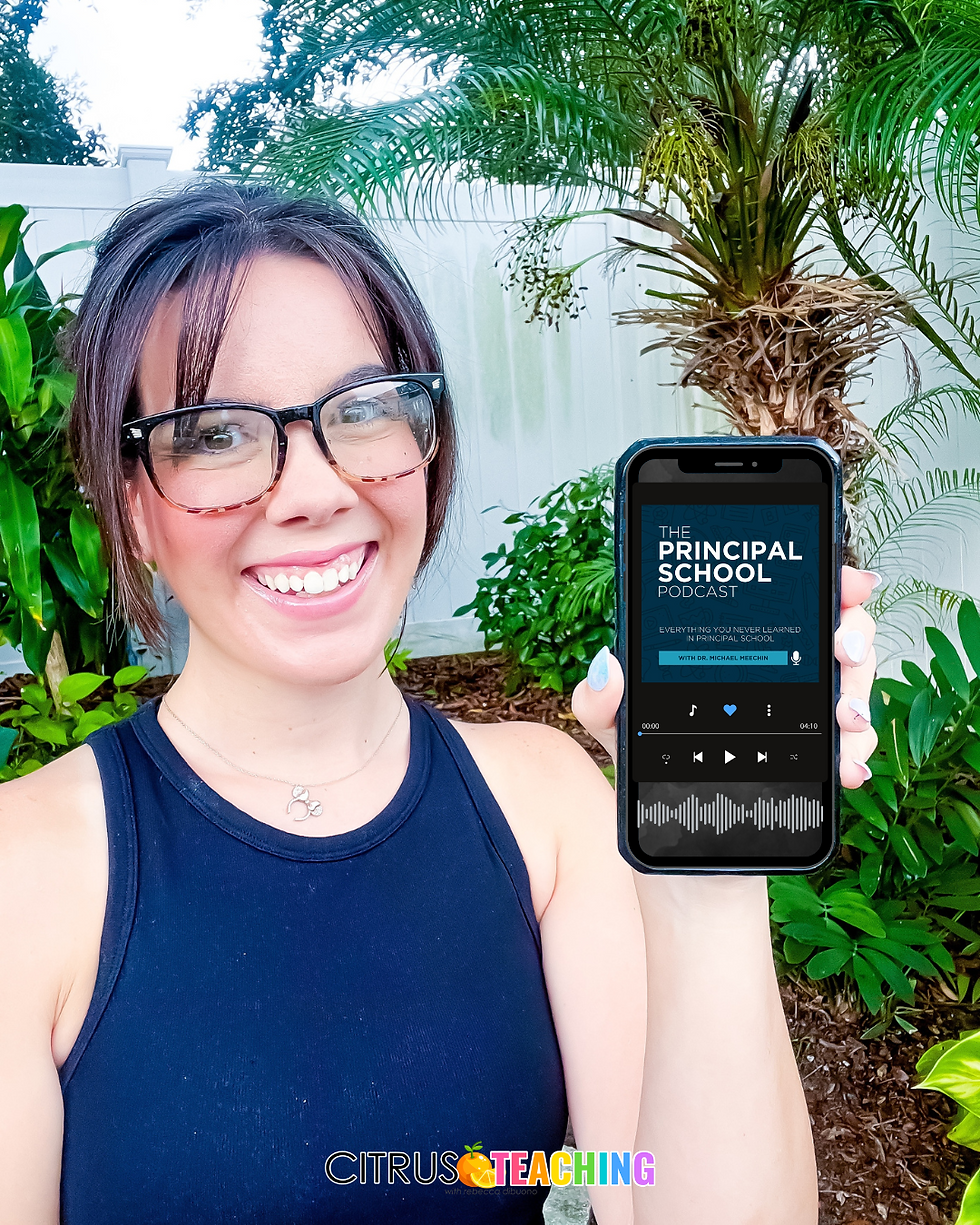
To get myself into the proper mindset of planning, I listened to an episode of one of my UCF professor's podcast, The Principal School, titled What Makes Professional Learning Actually Stick - Ep. 38. In the episode, Dr. Michael Meechin discusses the reason why traditional sessions fail, how to design meaningful, relevant experiences, the role of voice, choice, and practicality, new formats that engage staff, and what leaders must do to bring growth into their school culture. If you're a school leader or aspiring administrator, I highly recommend that you check out his podcast on your favorite listening app.
The focus of this session is for teachers to walk away with the confidence to facilitate a student-led data chat and a schedule built for their classroom to incorporate data chats in a meaningful way.
OUTLINING THE SESSION
The process for writing a professional learning plan is very similar to everyday lesson plans for the classroom. Begin with the end in mind and work backwards. Now that I know what I want participants to walk away with, it's time to create a plan that ensures their success within the 85 minute timeframe.
Similar to my weekly block plans, I create a timeline for the session. Starting at the end of the session, I leave a short 5 minute buffer for participants to complete the district completion survey and ask any questions. Then I head to the beginning to make time for reviewing the session overview complete with the district mission and vision statements, purpose statements, agenda, collaborative norms, and district instructional framework. With the mandatory sections of a district professional learning session in place, I can now plan for the remaining 75 minutes.
To create a simple bulleted list of action steps, I review the purpose that I have set for the session. If I want participants to feel confident in implementing student-led data chats, they'll need a framework to reference for successful data chats and time to practice. So, I add an introduction to new material - the data chat framework - and a 20 minute time slot for mock data chat practice.
I also want teachers to be able to create a schedule for their data chats that they can walk away and implement the following week. I build a time for participants to work on making a schedule with some guiding questions for them to consider.
Finally, I know that I'll need to be able to sell data chats to my participants by linking them to student ownership and high achievement outcomes. To prepare this section of the session, I read a variety of articles and selected Using Student Data to Inspire Goal Setting from Edutopia. This article is a quick read jam packed with setting the foundation through reimaging data collection, addressing teacher concerns, and the impact of incorporating data chats.
CREATING THE PLAN
This session is 85 minutes total complete with a timeline to ensure that all participants will walk away confidently and committed to incorporate data chats in their classroom. Let's review the outline so far:
5 min | SESSION OVERVIEW
5 min | INTRODUCTION
15 min | ARTICLE READING & REFLECTION
15 min | NEW MATERIAL & KEY INSIGHTS
20 min | MOCK DATA CHAT ROLE-PLAY
20 min | CREATING A CLASSROOM SCHEDULE
5 min | CLOSING REFLECTION & COMMITMENTS
Now that the what and why have been set, I need to think of how the session is going to meet the learning goal while keeping participants engaged in the content material.

I start with the introduction to the session. I want to get a baseline on where the
participants currently stand in their data journey so that I can best support all educators without the traditional icebreaker. For this professional learning experience, I plan to pose the question, "How do you currently involve students in understanding their own data?" This question note only encourages educators to self-reflect on their current classroom practices, but give the opportunity for experienced teachers to share their ideas that they currently implement with the group.
Within my classroom I encourage movement of my students throughout our lessons, and the same goes for any of the professional learning sessions that I facilitate. No one enjoys a sit and get learning style. So, I divided the article reading into three groups with each group focusing on a section. Then, we will mix it up and create groups of three with each participant in the group an expert on their section of reading. The participants will deliver a summary and thoughts to their group. This creates the purpose for data chats and ignites the engagement for the rest of the session. Then, we'll regroup and reflect together.
When delivering the new material that delivers the importance of data chats while addressing misconceptions, I'll reference an essential infographic that highlights the four components of a data chat: opening questions, data review, setting/revising goals, and creating a plan.

Once we've covered these essential parts, participants will be paired to conduct mock data chats. I plan to give each set a printout of sample data and present purposeful questions for each component for reference.
The final portion of the session will serve as a 20 minute work period for participants to modify their current classroom schedule and build a designated time for data chats. I'll reference my own weekly plan where Wednesdays are data days for students to pause and track, pause and reflect, or pause and celebrate. By setting aside this time on a regular basis, data will become an integral part in student learning and ownership over their own educational journey.
CUSTOMIZING SLIDES TO MATCH THE PLAN
For district professional learning days, the professional learning department sends a slide template to facilitators for consistency among all sessions. This ensures that all sessions are focused on achieving the same goal and theme for the day while aligning to the district's improvement plan.
As I work through the template, I think about what participants will need to reference throughout the learning experience. I consider the directions that I will give to complete various activities and provide a timer so that I can stay within the timeframe for each portion of the session. My purpose as the facilitator is to support the participants and guide their development on understanding data chats and how they fit within their own classroom.
Just like our students, the educators attending professional learning seminars bring their own experiences and needs. It is our job as a facilitator or presenter to customize the material to their classroom so that teachers leave feeling confident and ready to implement.
LET'S RECAP
Creating an engaging and meaningful professional learning session requires careful planning and a focus on participant needs. By incorporating interactive elements, fostering collaboration, and utilizing diverse teaching methods, facilitators can create an environment that promotes active learning and retention. As we strive to improve professional development, let us remember that the ultimate goal is to empower educators and inspire them to bring their best practices back to their classrooms, ultimately benefiting their students and the broader educational community.


%20(1)_edited.jpg)


Creating an effective professional learning session requires clear objectives, active participation, and continuous reflection to ensure lasting impact. Educators must design sessions that engage participants through collaboration, real-world applications, and ongoing feedback. In today’s academic world, even professionals and students seek expert assistance to enhance their learning experience. That’s where university assignment writing help services come into play. These services provide structured support, helping learners develop critical thinking and research skills. By combining strong facilitation with academic guidance, professional learning becomes both impactful and sustainable.